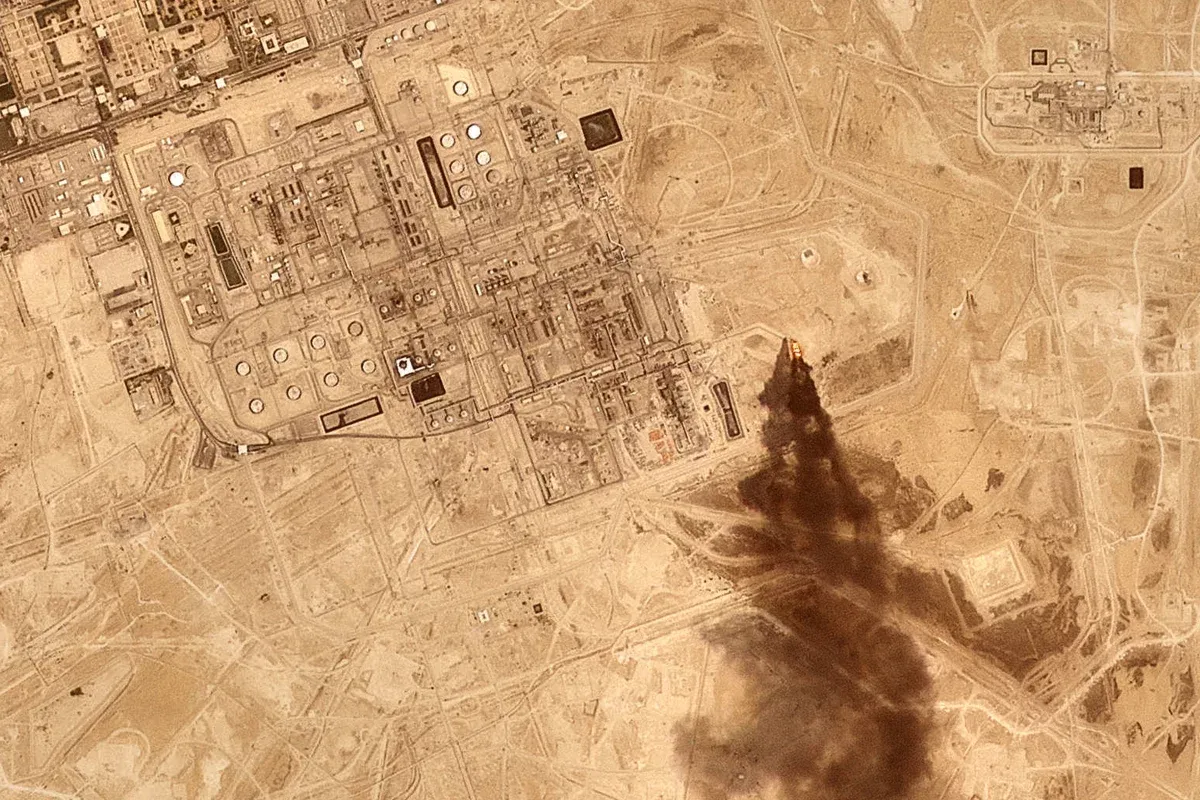
Jordan Intercepts Iranian Missiles Following Joint U.S. and Saudi Strikes in Iraq
Jordanian air defenses shot down five Iranian ballistic missiles following joint U.S. and Saudi air operations against militia positions in Iraq. The renewed clashes disrupt a short-lived pause in hostilities, putting global energy transit through the Strait of Hormuz and Red Sea at further risk.
Trending Analysis
LIVEWho writes the history of the July Uprising?

BRAC Bank's Q2 profit jumps 73% on higher investment income

Red Sea shipping slows after Houthi attack on Saudi Arabia, data shows

Gas crisis strikes paracetamol API, other industries

National & Politics
View All →
High risk little readiness
Dhaka has long expanded faster than it has planned. Wetlands have been filled, low-lying areas built over, and high-rises have been raised that may not withstand a major earthquake. In the final instalment of a six-part series, Star examines whether Bangladesh is ready to face a major quake despite years of studies, investments, and preparedness efforts.

Our digital evidence framework must evolve with AI
In Bangladesh, a person may be criminally liable based on digital evidence in the form of CCTV footage, WhatsApp conversations, Facebook posts, and so on. These are all admissible in legal proceedings. The recent investigation into the death of HSC candidate Nuzshat Jahan in Rangpur illustrates this clearly, wherein police relied on call records, CCTV footage, and witness statements to identify and arrest the accused in an abetment to suicide case.

Technology cannot compensate for the missing trust in land offices
Ask anyone in Dhaka who has tried to transfer a plot of inherited land what the hardest part was, and the answer will be: the paperwork. A family sells a parcel, signs the deed, pays the registration fee, and then discovers the real ordeal is still ahead: getting the khatian (record of rights) updated to reflect the new owner. This second step, called mutation, is where months disappear, where “processing fees” gradually turn into bribes, and where a legitimate transaction can stall for reasons no one will put in writing.
Red Sea shipping slows after Houthi attack on Saudi Arabia, data shows
Ship traffic through Bab el-Mandeb fell on Sunday after Yemeni Houthis attacked Saudi oil installations along the Red Sea coast, while transit through the Strait of Hormuz stayed low over the weekend, shipping data from Kpler showed on Monday.
Capital markets gain momentum following the central bank's updated monetary policy guidelines and targeted export incentives.
Business & Economy
View All →
Jordan Intercepts Iranian Missiles Following Joint U.S. and Saudi Strikes in Iraq
2 months ago

Kafrul Swechchhasebak Dal leader hired hitmen to kill Jubo Dal rival: DB
2 months ago

SC stays HC orders barring shown arrests without specific allegations
2 months ago

Study finds microplastics in 3 out of 4 toothpaste samples
2 months ago
Lifestyle & Perspective
View All →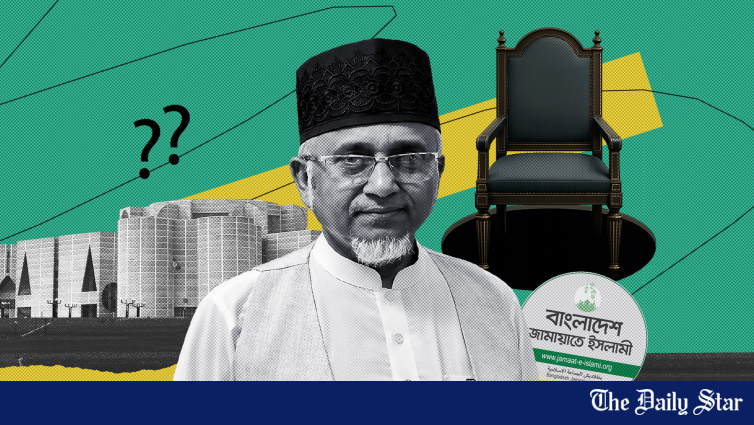 2 months ago
Gazi Nazrul’s case raises bigger questions for parliament
The controversy surrounding Satkhira-4 MP Gazi Nazrul Islam poses two questions that must not be confused. Can Jamaat-e-Islami, by expelling him, make his parliamentary seat vacant? And can parliament ignore any serious misconduct merely because no express ground for disqualification has yet arisen? Under the law, the first answer is no. In a credible democracy, the second must also be no.
 2 months ago
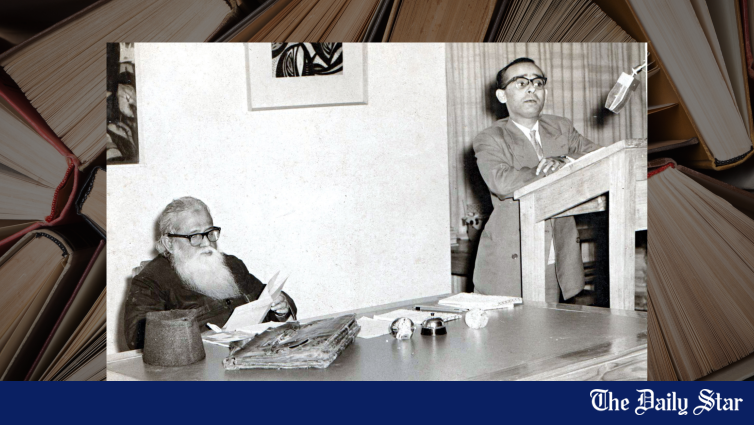
Mufazzal Haider Chaudhury and the idea of Bangladesh
This 22nd of July marked the birth centenary of my father, Mufazzal Haider Chaudhury. I harbour no illusions that he would have lived this long in the normal course of events, however. The men on my father’s side of the family tend to be notoriously short-lived; his father died when he was nine, both his brothers passed away in their fifties, and even my only brother, his older son, left us when he was 47. But my father did not die a natural death. He was abducted on 14 December 1971, just two days before his country’s victory in one of the bloodiest liberation wars of the twentieth century, and tortured, bayoneted and shot to death in the early hours of 15 December, along with many other pre-eminent intellectuals of the land.
 2 months ago
Madhupur pineapple prices crash as rain, flood dampen demand
Pineapple farmers in Tangail’s Madhupur upazila are selling this season’s harvest at a loss, as prices for the GI-certified fruit have collapsed at the peak of the season.
Education & Career
View All → 2 months ago
Chattogram's listed 'top criminal' David Emon arrested in Jashore
Law enforcers have arrested Mobarak Hossain alias David Emon, a listed "top criminal" in Chattogram.
 2 months ago
Defeating digital violence against women requires a unified front
A report published in The Daily Star in March describes a case from Bagerhat where a woman was blackmailed using a video recorded without her knowledge. When she refused to comply, the man sent doctored clips to her husband, who beat her and later filed for divorce. Her tormentor was never brought to justice. Hers is just one of thousands of cases of technology-facilitated gender-based violence (TFGBV) surfacing across digital Bangladesh.
 2 months ago
We need stronger digital systems to seize the China-plus-one opportunity
Between April and June last year alone, Bangladesh received more than $53 million in fresh Chinese investment, nearly $30 million of it flowing straight into textiles. More than twenty apparel factories here now carry Chinese capital, some brand new, others leased from local owners squeezed for capacity. This is not an act of charity, but a calculation. Faced with tariff pressures in their largest markets, Chinese manufacturers are doing what manufacturers have historically done when the math no longer adds up: relocating their production bases. The question is whether Bangladesh is actually built to catch the shift.
2 months ago
Kafrul Swechchhasebak Dal leader hired hitmen to kill Jubo Dal rival: DB
A Kafrul Thana Swechchhasebak Dal leader allegedly hired a group of contract killers from Magura to assassinate a local Jubo Dal leader over a long-running turf war, the Detective Branch (DB) of Dhaka Metropolitan Police claimed today.
Tech & Innovation
View All →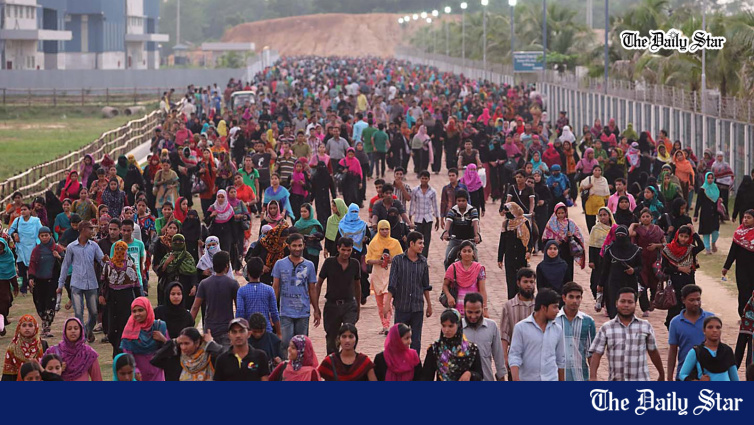 2 months ago
Women built the RMG might. Now they are losing ground
When Nasima got a text from her employer during the Eid holidays, she expected another routine message. Instead, it told her she had been fired.

A trillion-dollar ambition needs a stronger investment climate
Technology cannot compensate for the missing trust in land offices

Salinity creeps deeper into southwest
Mufazzal Haider Chaudhury and the idea of Bangladesh
Madhupur pineapple prices crash as rain, flood dampen demand
Culture & Entertainment
View All →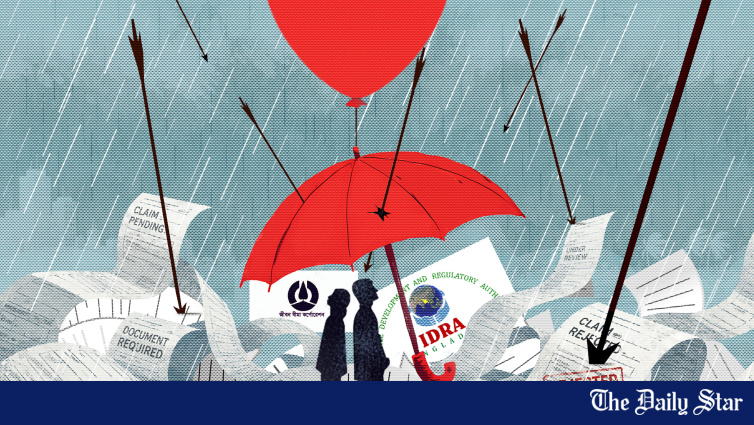
Why are we still struggling to make health insurance work?

I spent two years learning AI, then another year unlearning it

THE UNPUBLISHED INQUIRY
SC stays HC orders barring shown arrests without specific allegations
Health & Wellbeing
View All →
SSC, equivalent results to be published on August 10
The results of the Secondary School Certificate (SSC) and equivalent examinations 2026 will be published simultaneously across Bangladesh on August 10, the Bangladesh Inter-Education Board Coordination Committee announced today.
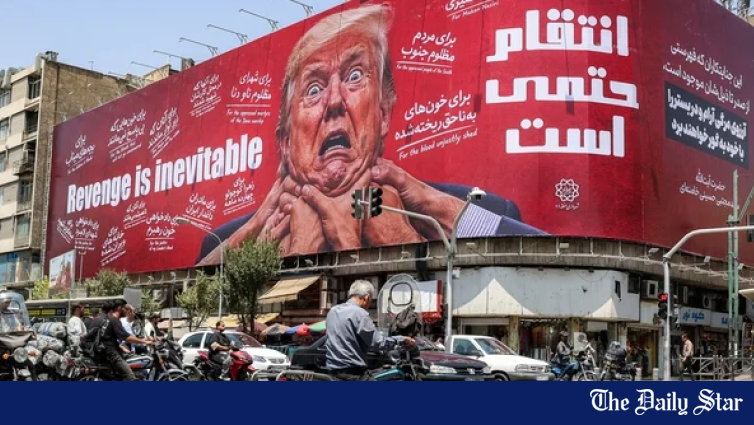
Iran says no current negotiations with US
Iran's foreign ministry on Monday said it was not currently involved in negotiations with the United States, despite a halt in recent fighting between the two sides.
Why are we still struggling to make health insurance work?
Bangladesh has committed itself to achieving universal health coverage (UHC), ensuring that everyone can access necessary health services without suffering financial hardship. Yet, out-of-pocket payments continue to finance most healthcare, forcing families to borrow money, sell assets, or forego treatment altogether. Recognising this challenge, the government’s Health Care Financing Strategy identified health insurance as a key instrument to reduce out-of-pocket spending and accelerate progress towards UHC. More than a decade later, however, the country remains at the pilot stage.